

Following what World Rugby calls the most extensive anti-doping investigation in the sport’s history, six Georgian rugby players and a team doctor have received lengthy suspensions for their roles in a urine-swapping scheme designed to evade detection ahead of the 2023 Rugby World Cup.
Former captain Merab Sharikadze received the longest ban at 11 years. Giorgi Chkoidze was suspended for six years, while Lasha Khmaladze, Otar Lashkhi, and Miriani Modebadze each received three-year bans. Lasha Lomidze was given a nine-month suspension. Additionally, national team doctor Nutsa Shamatava was banned for nine years for providing players with advance notice of out-of-competition doping controls via group chats.
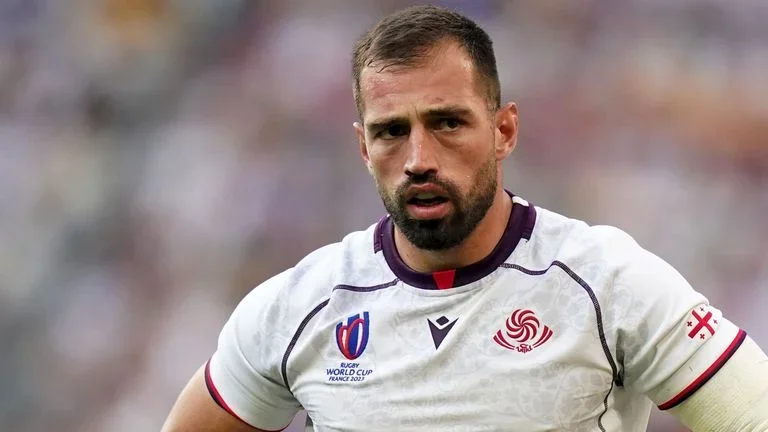
Merab Sharikadze, former Georgia captain, received an 11-year ban for his involvement.
World Rugby said it discovered irregularities in urine samples collected before the 2023 Rugby World Cup in France and promptly alerted the World Anti-Doping Agency (WADA). The joint investigation concluded that the six players “engaged in swapping of urine samples to avoid the risk of testing positive for substances they believed were prohibited.” The team doctor provided advance notice of testing, and other staff members arguably knew or should have known such notice was given.
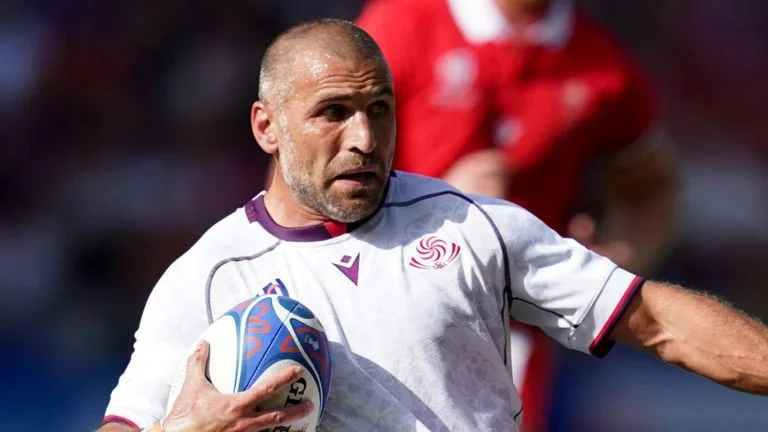
Lasha Khmaladze received a three-year suspension.
Crucially, World Rugby stated the investigation found no evidence that the urine swapping was intended to conceal performance-enhancing substances. Instead, there was “credible evidence” that the players were attempting to hide use of cannabis and the painkiller tramadol.
The Georgia Rugby Union accepted a misconduct charge and agreed to an undisclosed financial penalty. It also committed to implementing “a roadmap of various reforms and measures in its anti-doping training and education to mitigate the risk of any future issues of this nature arising.”